Adults living with obesity
WHO estimate for 2022.
WHO source
PEPTISPIRE™ · 多肽微针制剂与递送研发技术平台
One engineering framework for semaglutide, tirzepatide and retatrutide feasibility programs, linking formulation, array structure, performance testing, packaging and transfer planning.
Research and contract development only. This page does not present an approved drug, consumer product, dosing instruction or injection-equivalent claim.
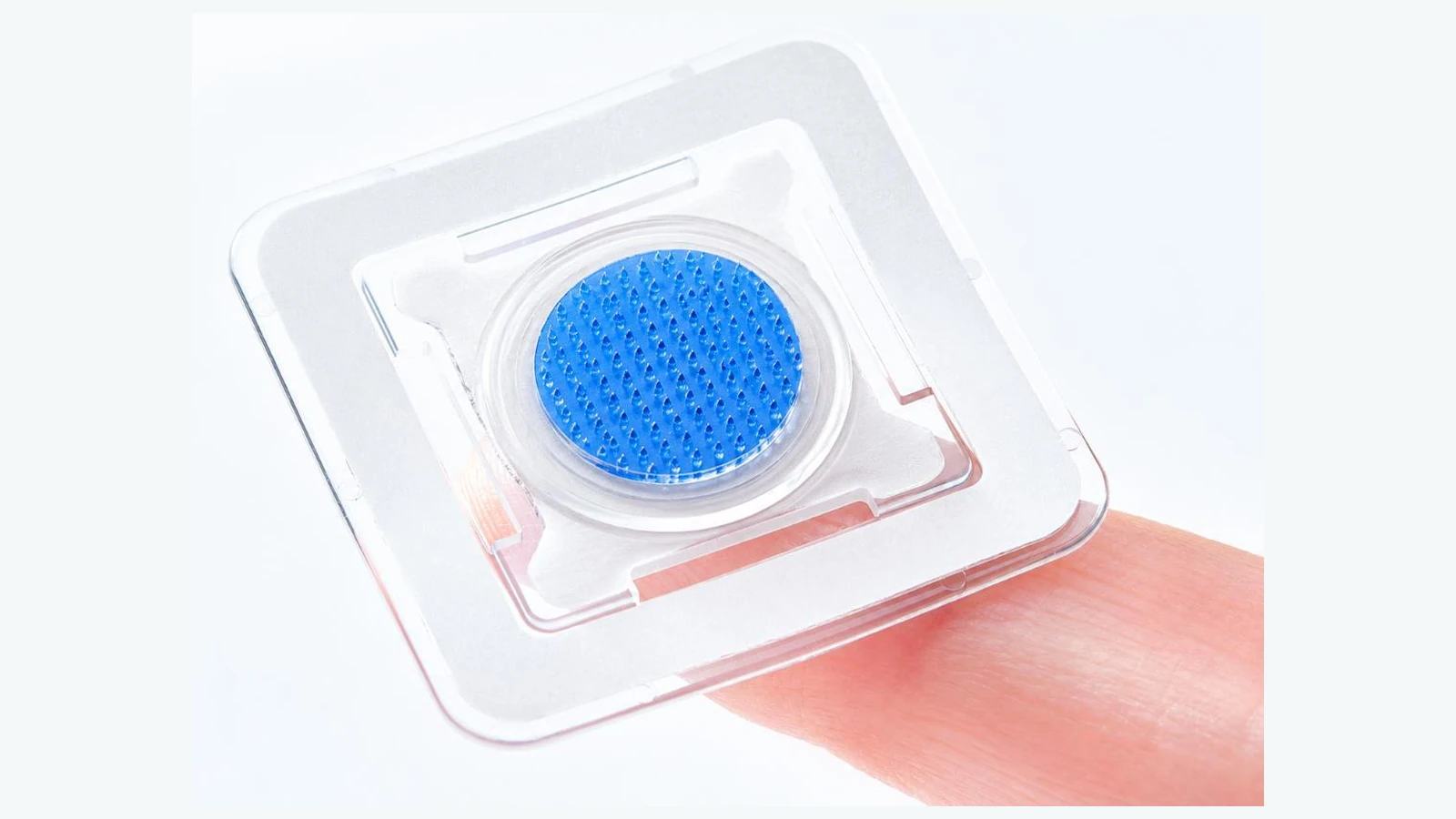
01 · MARKET CONTEXT
The source document uses current market scale to explain why alternative GLP-1 delivery formats are being investigated. These commercial figures describe the category. They do not establish the status or performance of a PeptiSpire product.
WHO estimate for 2022.
WHO sourceCombined 2025 full-year revenue reported by Lilly.
Lilly sourceNovo Nordisk 2025 reported total.
Novo Nordisk source02 · DELIVERY RATIONALE
Peptides face oral degradation and absorption barriers; injections introduce device handling and sharps management; conventional adhesive patches do not passively move large hydrophilic peptides across intact stratum corneum.
Microarrays can place a peptide-bearing structure across the stratum corneum for product-specific deposition and delivery studies.
The format may reduce dependence on a traditional needle-and-syringe presentation, but usability and acceptance still require evidence.
Needle height, spacing, geometry, payload localization and polymer system can be designed around a target product profile.
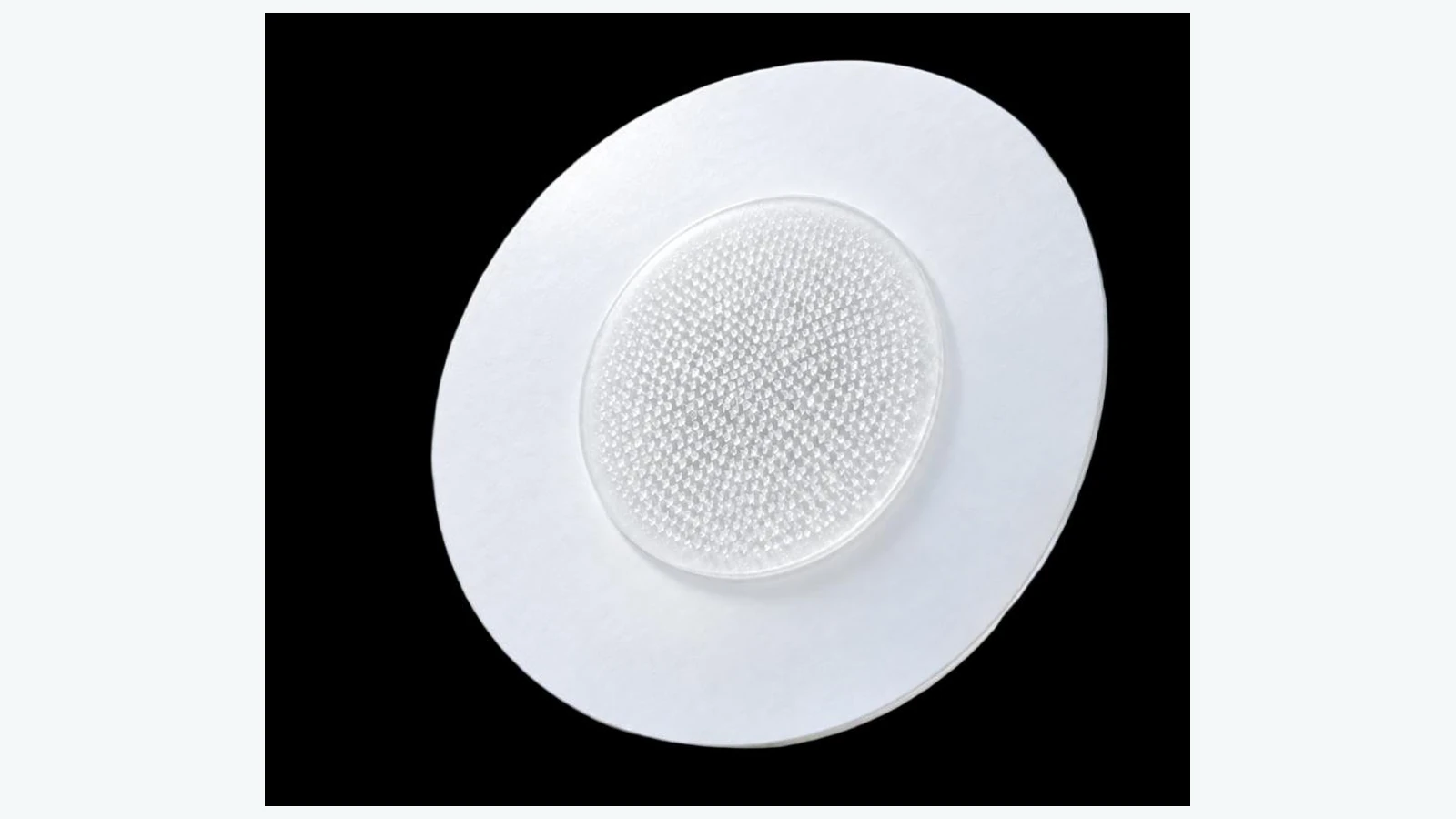
03 · PEPTISPIRE™ PLATFORM
PeptiSpire is presented in the supplied dossier as a continuing development platform, not a single locked process or ready-to-market therapeutic product.
Needle height, tip, spacing, distribution and array form.
Needle strength, base properties, peptide compatibility, drying, stability and proposed shelf-life strategy.
Insertion, dissolution, release, skin deposition and barrier-response methods selected for the project.
Incoming materials, in-process checks, finished-sample testing and traceable release decisions.
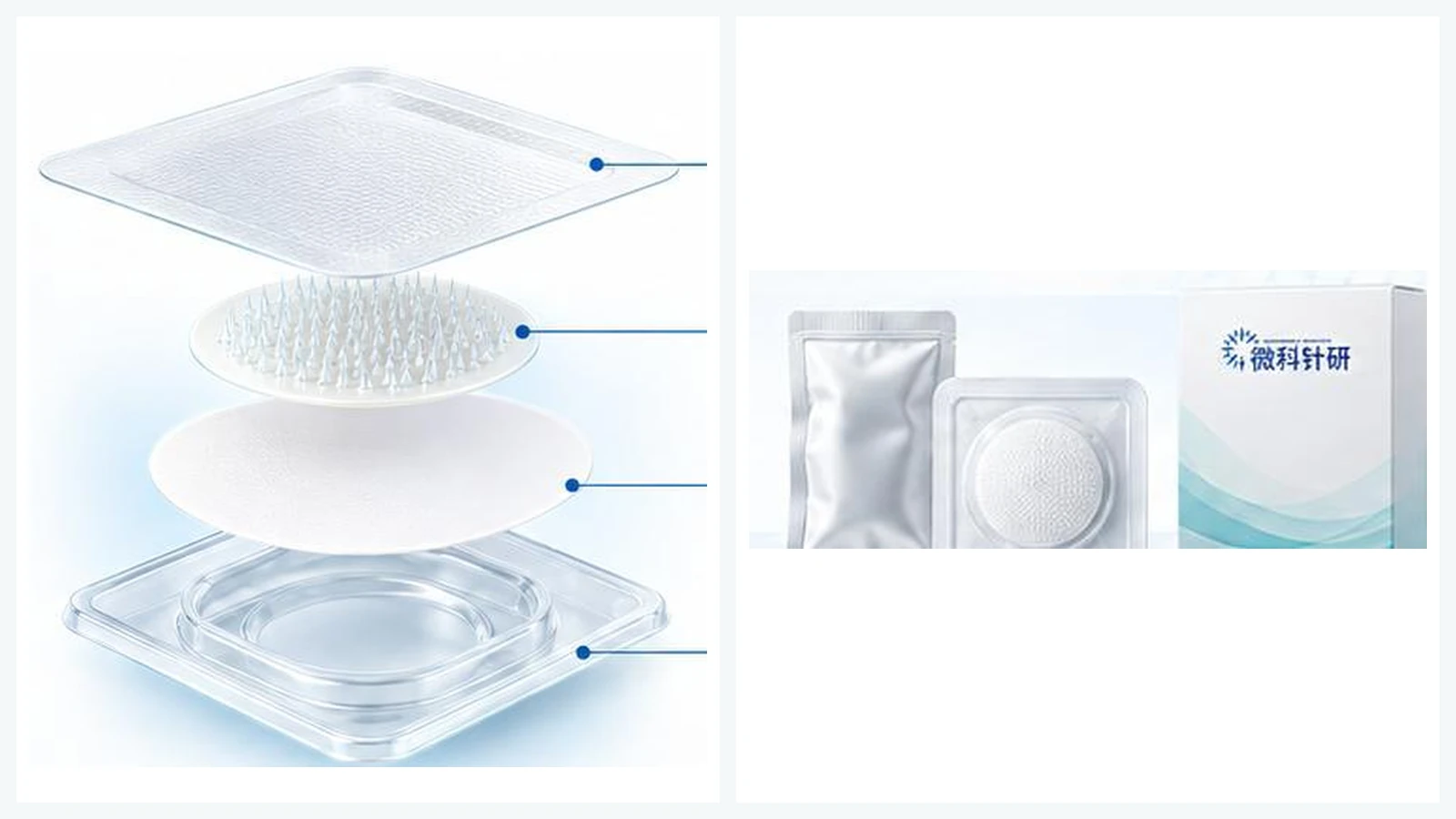
Backing, applicator, blister, foil barrier, labels, outer carton and OEM/ODM transfer package.
04 · SOURCE-DOCUMENT EVIDENCE
The following images and values come from the supplied PeptiSpire PDF. They require confirmation against sample identity, method revision, batch records and current certificates before being used as project specifications or commercial claims.
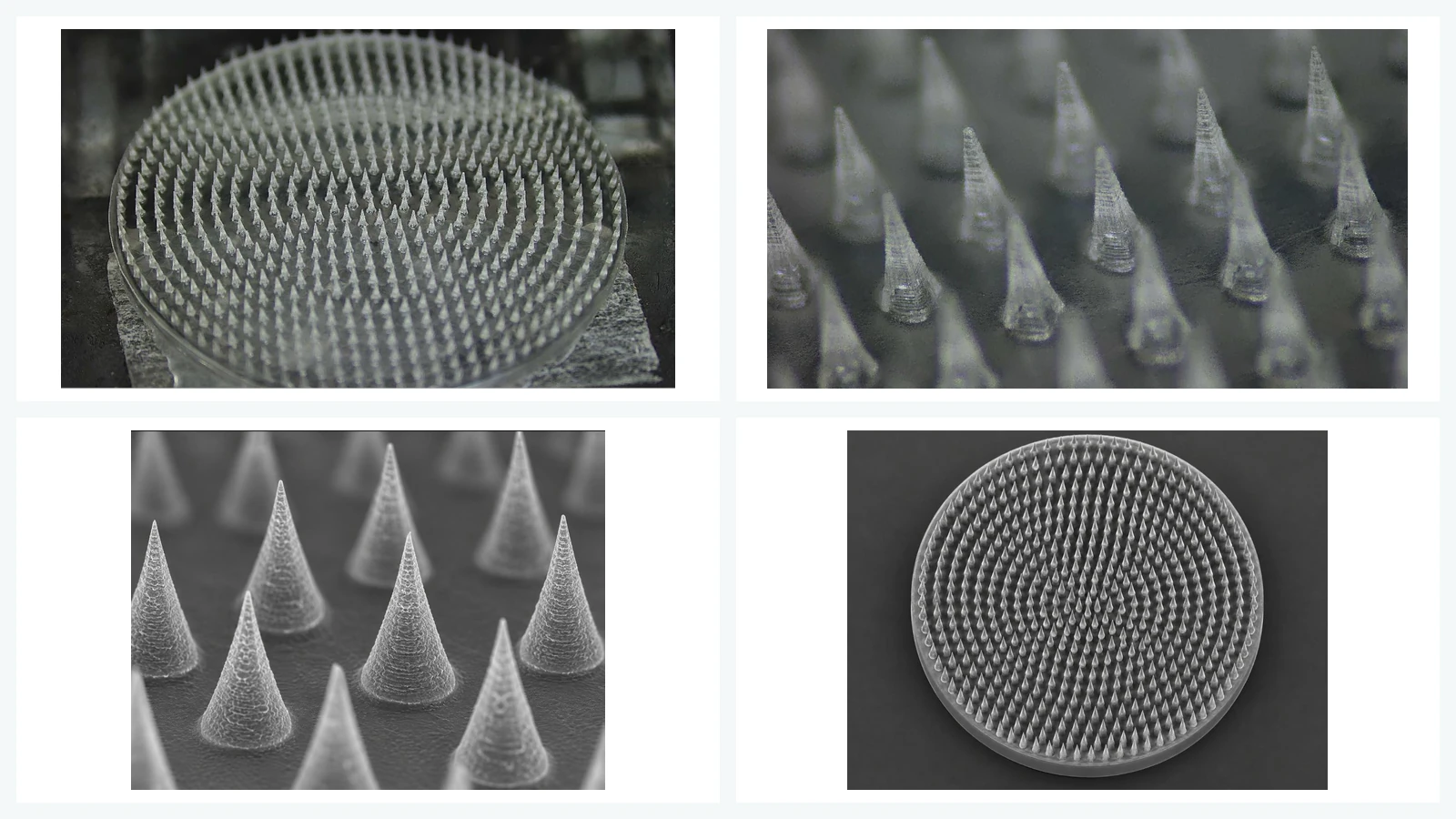
MORPHOLOGY
The dossier reports complete-needle rate above 99% and needle-body consistency above 95% for the evaluated samples. These figures are retained as source-document results and are not applied to every formulation or production batch.
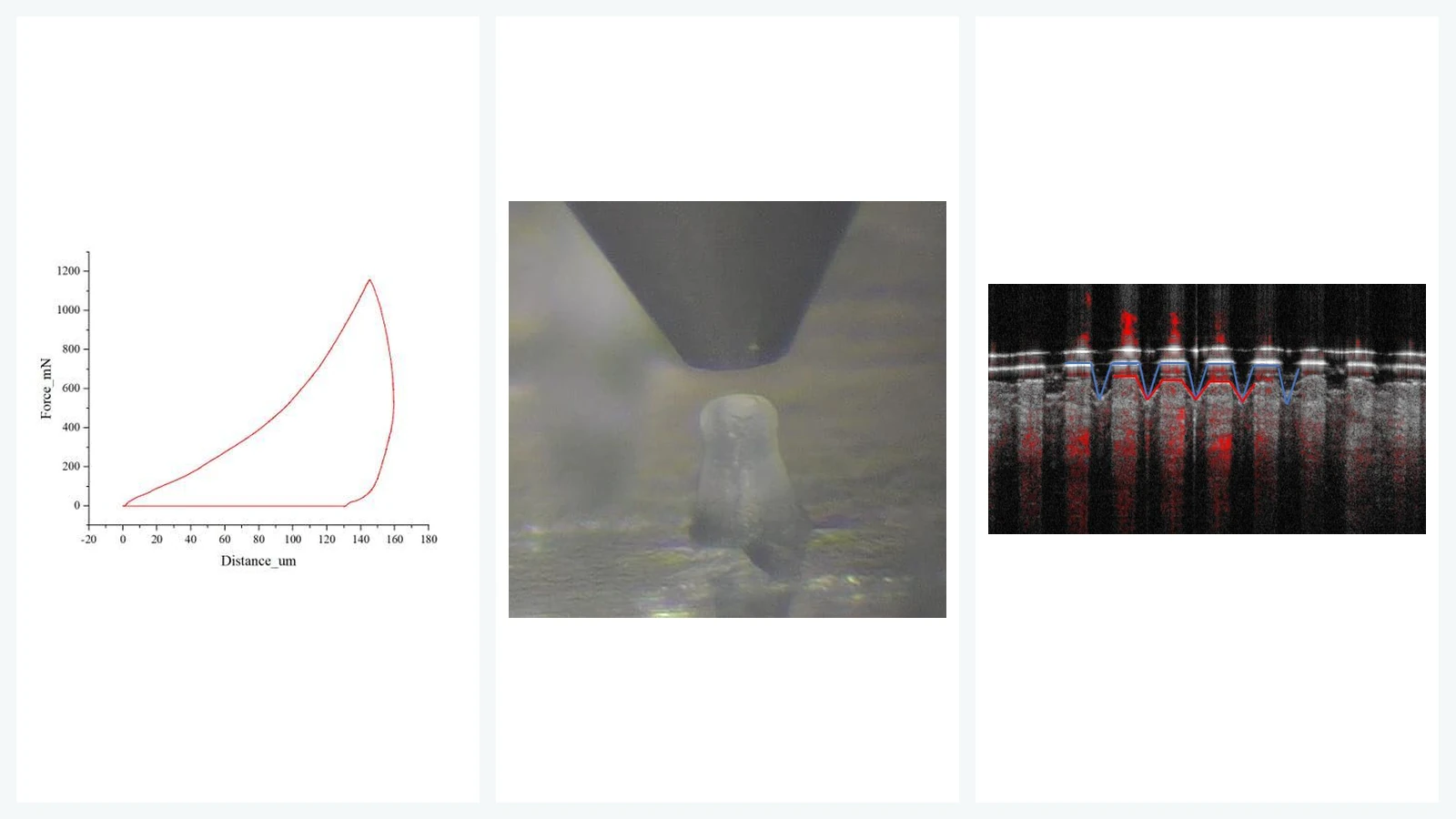
MECHANICAL & INSERTION
The document shows a force-distance trace peaking at approximately 1,050 mN near 140 µm and an OCT panel used to observe insertion. The phrase “greater than 1 N per 150 µm” remains a dossier claim pending method and sample verification.
ANALYTICS & STABILITY
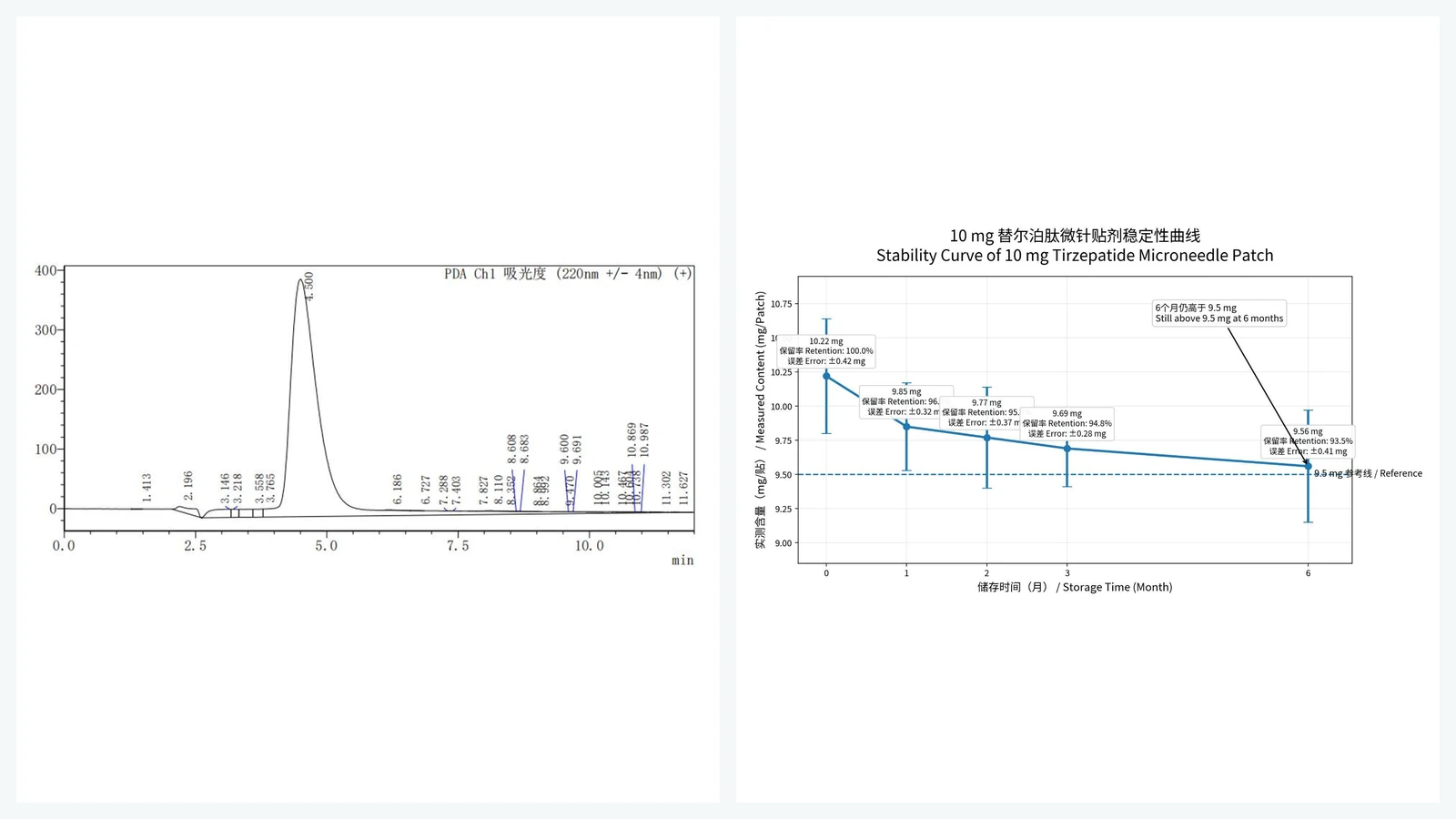
The dossier plots measured content of 10.22, 9.85, 9.77, 9.69 and 9.56 mg/patch at 0, 1, 2, 3 and 6 months. The proposed matrix includes pharmaceutical excipients, trehalose, preservative and buffer. Storage conditions, analytical validation and statistical acceptance must be confirmed before any shelf-life statement.
INTEGRATED & LAYERED ARRAYS
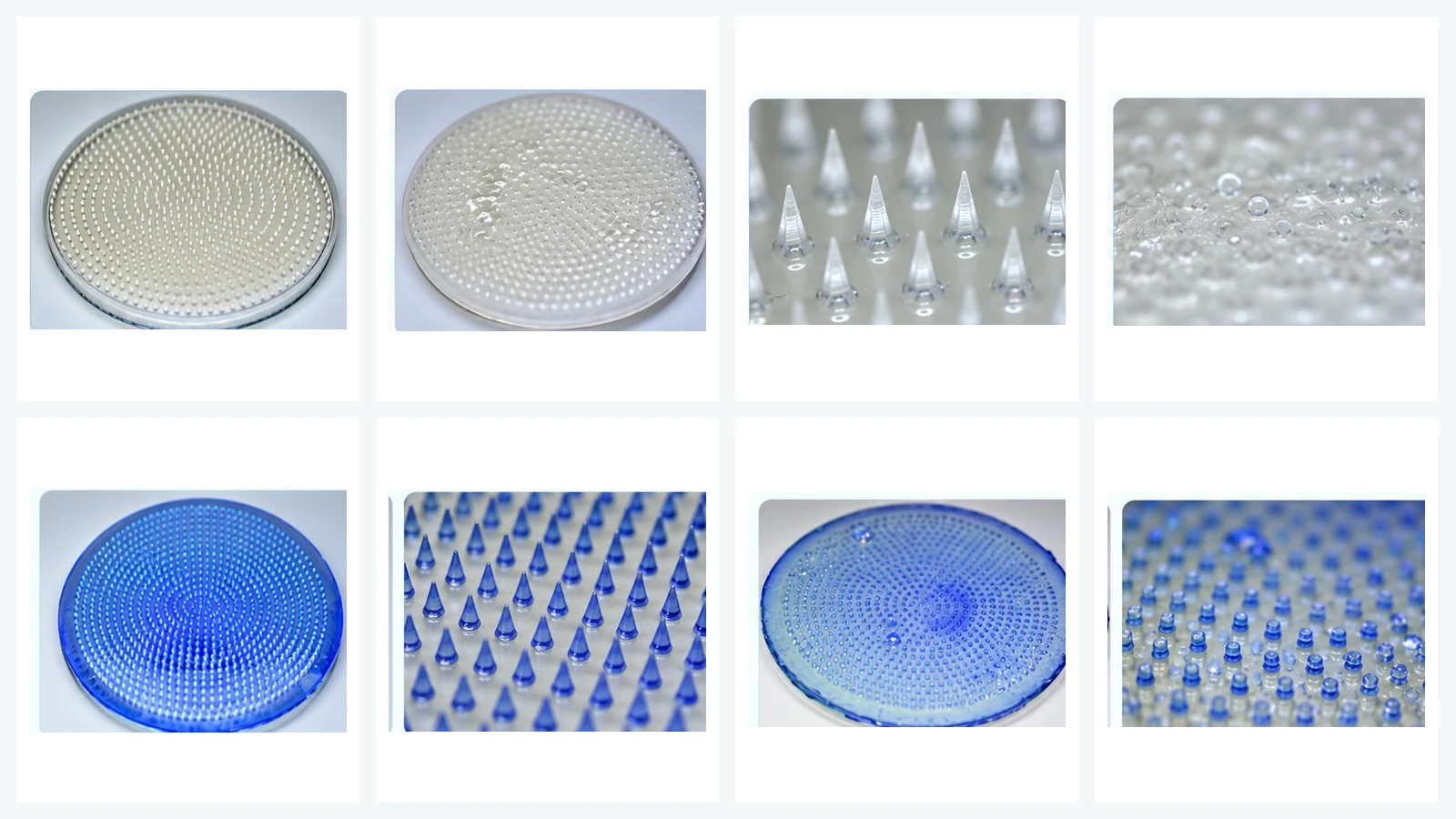
Integrated arrays distribute formulation through the needle structure. Layered designs differentiate the tip and base regions to support payload localization and dose-control development. The images document dissolution-morphology changes for both approaches.
05 · GLP-1 PROGRAM MATRIX
Semaglutide, tirzepatide and retatrutide are prioritized as separate feasibility programs. They do not share an automatic dose, formulation, release target or regulatory status.
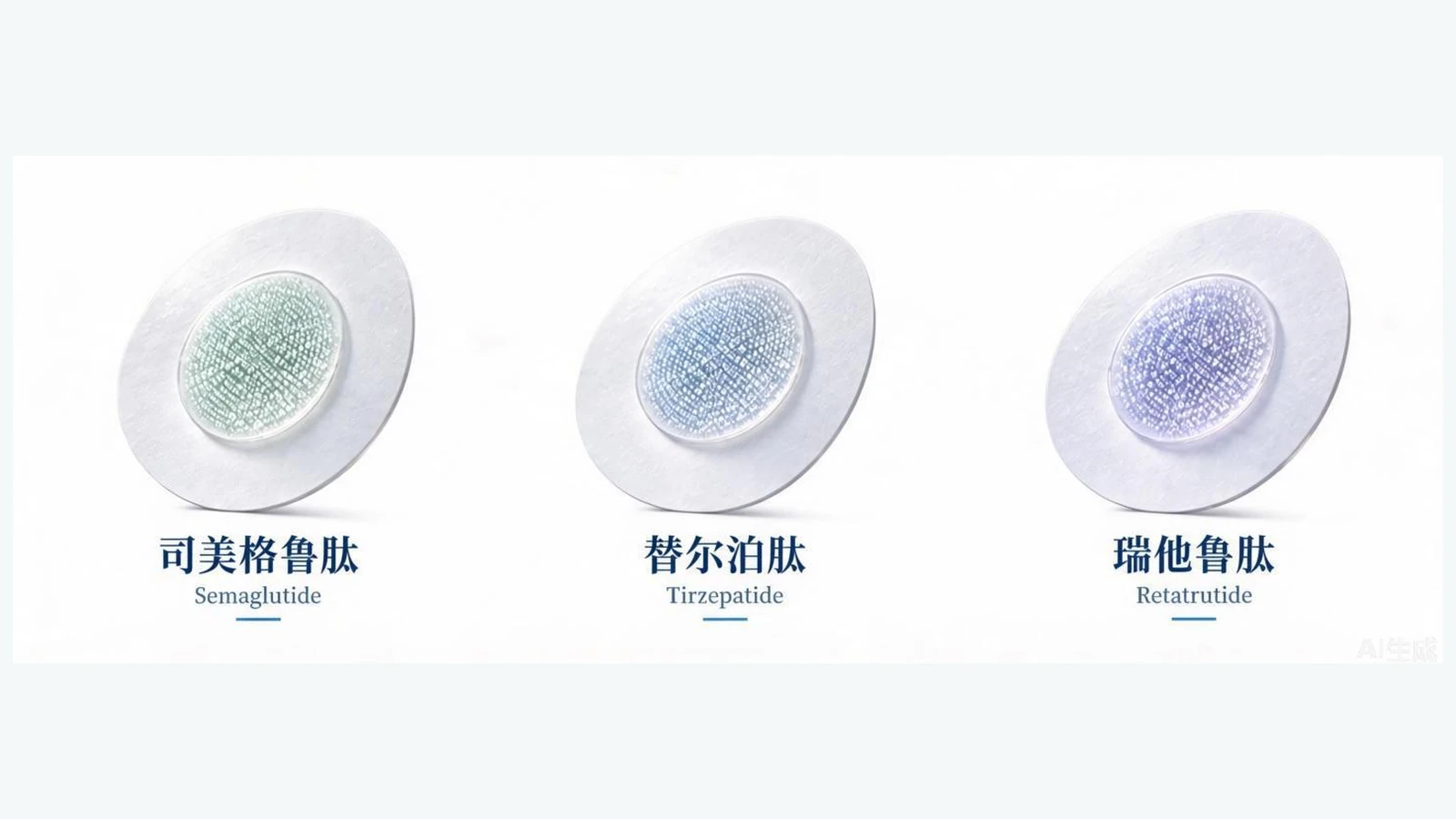
The listed loads are nominal development targets from the source document. They are not prescribing information, approved doses or proof of delivered dose.
06 · CUSTOM PLATFORM
Example source-document range, adjusted to the R&D objective.
Subject to formulation capacity, delivered fraction and product-specific validation.
Needle pattern, tip form, backing and adhesive layout can be developed together.
Formulation, structure, packaging and transfer records organized under one brief.
07 · QUALITY MANAGEMENT
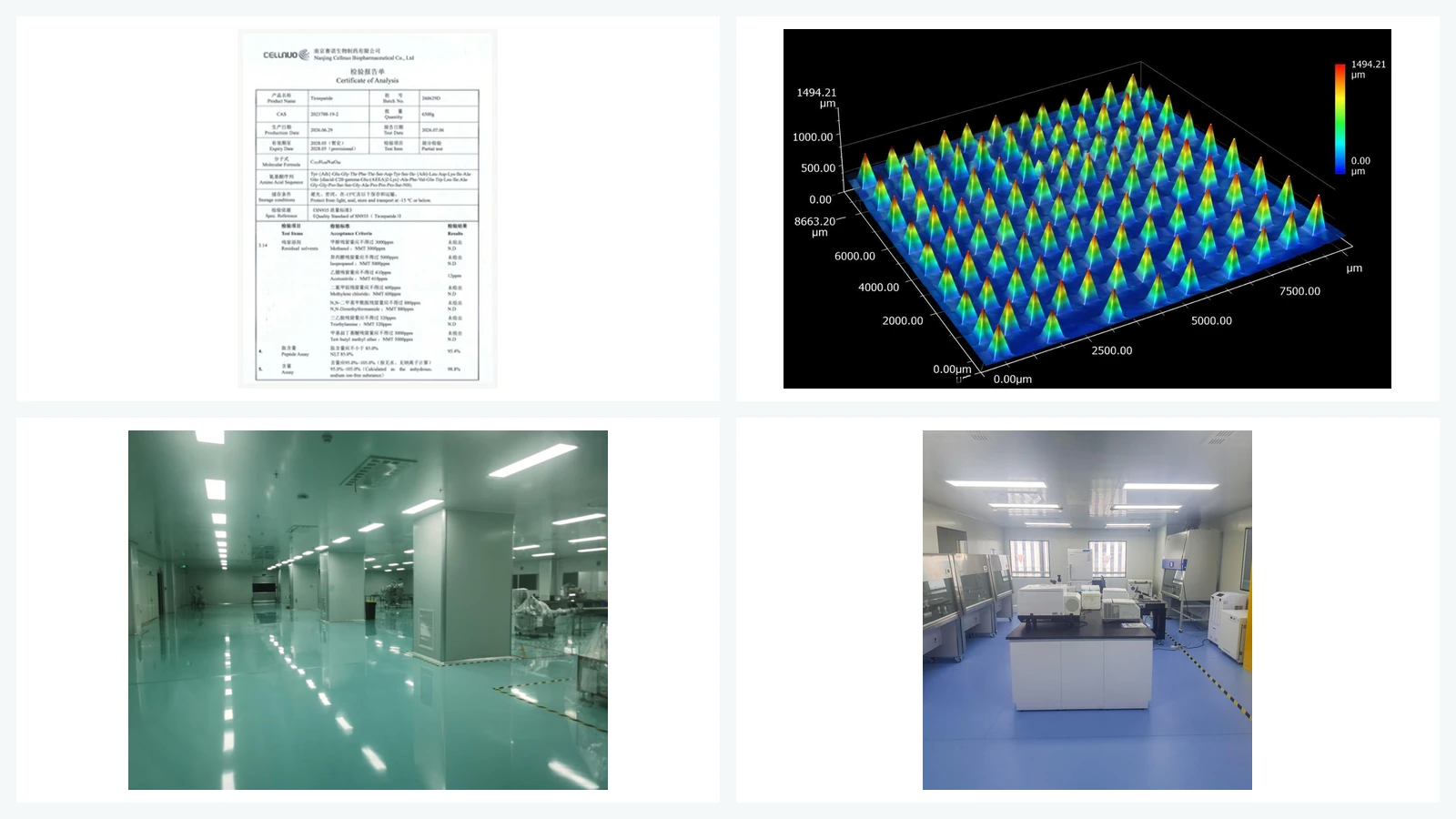
The dossier states a 100,000-grade GMP clean workshop, a class-10,000 independent biology laboratory, and GMPC/ISO 22716 certification. Certificate holder, scope, validity and applicability must be re-verified before these statements are used in a quotation or regulatory file.
08 · PROTOTYPE HANDLING STUDY
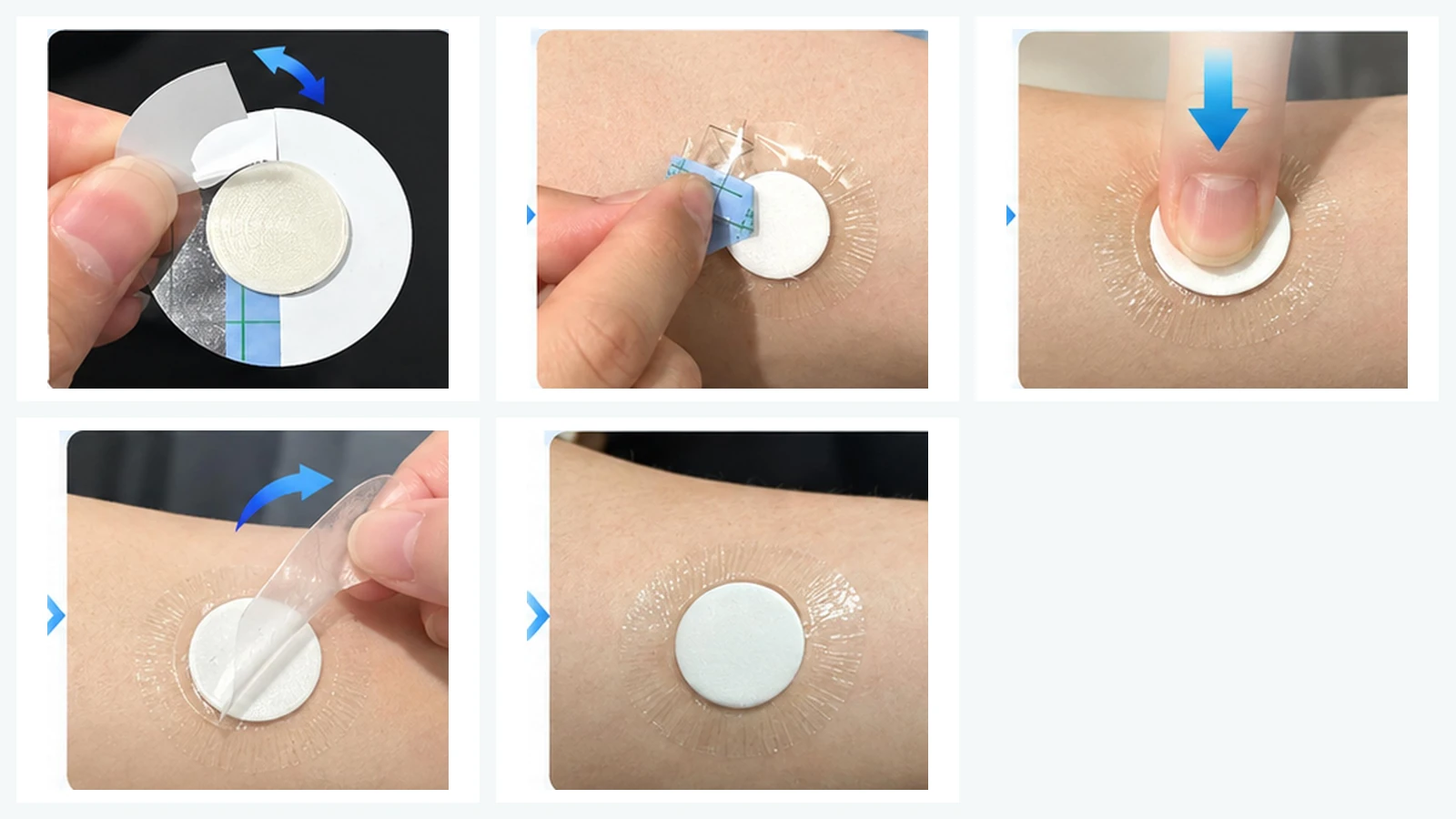
The source sequence covers removal of the first liner, light positioning on clean dry forearm skin, vertical pressing for 30 seconds, removal of the outer liner and continued wear. It is displayed for study planning and is not a patient instruction.
Source integration note. The text, numerical panels and photography above were extracted from the supplied 15-page PeptiSpire™ GLP-1 peptide dissolving-microneedle dossier. Image panels were recomposed into uncropped 16:9 landscape canvases so the site does not hide content in vertical thumbnails.
B2B PROJECT INTAKE
Tell us the molecule, intended market, dosage-form objective, test scope and expected project stage. We will reply from info@mnpbio.com.
info@mnpbio.comWhatsApp +852 42442955WhatsApp +86 185 0403 3190